
As autonomous naval systems gain traction, the challenge is shifting from technology to architecture. A recent article by Dr Alix Valenti, featured in Warsight, highlights how navies are acquiring autonomous platforms faster than they are defining how to use, integrate, and sustain them.
While autonomy promises endurance and multi-mission capability, its effectiveness ultimately depends on clearly defined operational frameworks. Without a clear understanding of what needs to be optimised, under which constraints and in which environments, autonomy risks remaining more promise than practice.
A familiar challenge in commercial shipping
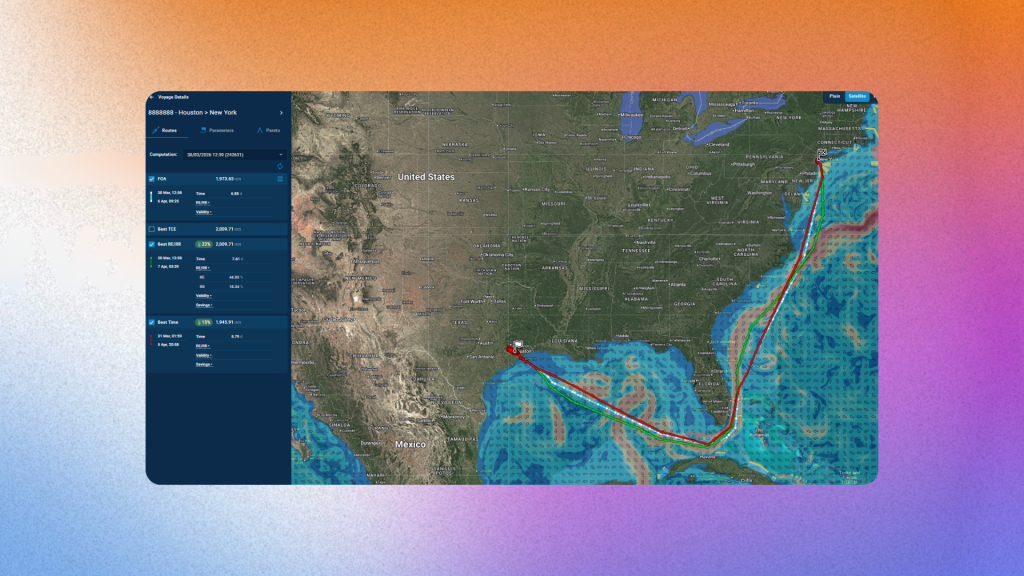
Theyr’s T.VOS applies multi-objective optimisation to balance fuel efficiency, weather, operational constraints and commercial exposure in real time. As autonomy continues to evolve across maritime, the ability to translate capability into structured, decision-ready systems will be critical.
A distinctive enhancement of T.VOS for defence applications is the introduction of two additional optimisation objectives for autonomous vessels: retained energy and retained reliability. These objectives ensure that vessels not only complete missions efficiently, but also preserve sufficient operational capacity and system integrity to respond to dynamic threats, extended tasking, or degraded environments.
Explore the full article, here.